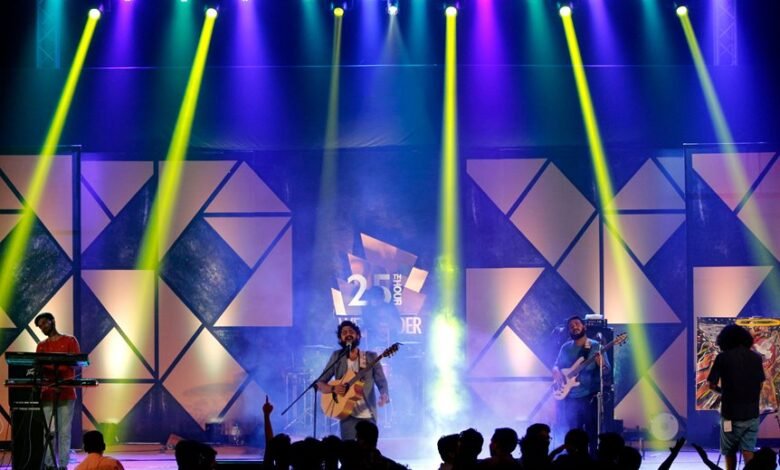
Rod Stewart’s 3.5 million concert operates as a systems problem, where budgeting, staffing, and infrastructure must align with live risk management. The plan emphasizes scalable stage and sound engineering, data-informed decisions, and transparent reporting to justify costs. People, scheduling, and safety form the core constraints, with rehearsals and cue timing calibrated for reliability under pressure. The resultant framework invites scrutiny: can such precision sustain variable venues, and what hidden frictions might still emerge?
What a Rod Stewart-Scale Tour Actually Demands
A Rod Stewart–scale tour represents a substantial logistical and financial undertaking, far beyond a typical concert run. The analysis centers on stage crew competencies, meticulous logistics planning, and timely production rehearsals, measuring risk against contingency.
Budget scrutiny reveals tight tour budgeting constraints, balancing personnel costs with scalable infrastructure.
Data supports decision-making, prioritizing efficiency, accountability, and transparent reporting for stakeholders and freedom-seeking audiences alike.
Crafting Stage and Sound: the Engineering That Drives the Show
Crafting stage and sound hinges on precise integration of disparate systems to sustain a seamless performance.
The analysis centers on Stage acoustics, rigging orchestration, lighting cues, sound checks, stage logistics, and power distribution, mapping how each element interacts under pressure.
Findings emphasize disciplined standards, verifiable data, and safety-conscious optimization, delivering a transparent, freedom-respecting assessment of engineering choices shaping the Rod Stewart show.
People, Scheduling, and Safety: Running the Machine
In live productions, People, Scheduling, and Safety function as the operational backbone that translates plan into practice, ensuring personnel alignment, timely execution, and risk mitigation across complex touring logistics.
The analysis examines people management practices, risk assessment rigor, scheduling integrity, and safety protocols, highlighting how disciplined coordination minimizes disruption, protects personnel, and sustains artistic quality under dynamic, high-pressure touring constraints.
Mastering the Flow: Cues, Tweaks, and Foolproof Execution
Efficient show flow hinges on precisely timed cues, calibrated tweaks, and robust procedures that collectively thwart misreads and lapses under live-pressure conditions. The analysis identifies cue timing as the backbone of synchronization across departments, while tone calibration ensures consistent performer and audience perception.
Systematic rehearsals, objective checklists, and rapid feedback loops translate planning into reliable execution, minimizing improvisation-induced risk.
Frequently Asked Questions
How Is Audience Energy Measured During the Performance?
Audience energy is quantified via measurement metrics such as clap rate, vocal intensity, and movement frequency, analyzed post-show. The method emphasizes objective data, with cautious interpretation and cross-checks to avoid overreliance on subjective impressions.
What Unexpected Costs Often Surprise Organizers?
Unexpected costs often surprise organizers, including overruns in production, insurance, and permit fees. Contingency planning mitigates impacts, though evidence suggests accurate budgeting remains challenging. The analysis emphasizes rigorous risk assessment, transparent vendor contracts, and adaptive scheduling for freedom-loving audiences.
How Are Guest Artists Integrated on Tour?
Guest artist dynamics are negotiated through formal agreements, cueing, and timing, with setlist coordination ensuring seamless transitions; the process emphasizes logistical precision, legal clarity, and artist autonomy, yielding a disciplined yet flexible approach that respects both performance integrity and audience expectations.
What Is the Backstage Etiquette for Crew?
Backstage etiquette for crew prioritizes safety and efficiency. For example, a tour case-study shows strict staggered access and clear radio discipline. Backstage protocol minimizes delays, while crew coordination, mitigates conflicts and ensures timely, professional performances.
How Is Post-Show Revenue Tracked and Allocated?
Post-show revenue is tracked via audited reporting and transparent ledgers, with allocation methods specified in contracts; revenues are allocated according to predefined shares, performance fees, and expenses, then reconciled against ticketing, sponsorships, and merchandise, ensuring evidence-based, precise distribution.
Conclusion
This synthesis presents a disciplined, evidence-based portrait of a Rod Stewart-scale tour, where budget discipline, scalable infrastructure, and rigorous rehearsal underpin reliability. Data-driven decisions underpin staffing, scheduling, and safety protocols, while engineered stage and sound systems ensure precise integration and resilience under pressure. The orchestration of cues and flow reveals a tightly controlled machine rather than a cantilevered performance. Like a well-tuned instrument, the tour’s coherence exposes the fragility of any deviation.