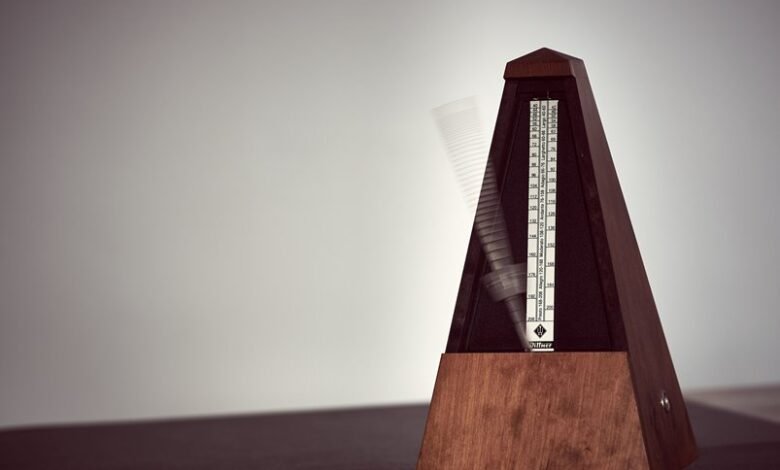
Six-eight, a compound duple meter, yields a dual heartbeat—two main beats per bar with triplet subdivisions—whose feel shifts with tempo, accent, and texture. Composers shape mood by stressing different eighth-note patterns and harmonic pacing, producing anything from lilting sway to driving momentum. Across genres, 6/8 organizes phrases and phrasing for cross-rhythms and expressive nuance. The mechanics, history, and practical implications invite closer examination, as subtle choices reveal why certain grooves endure and others fade from prominence.
What 6/8 Time Actually Feels Like
In music, 6/8 time is often described as a compound duple meter, where two primary beats per measure subdivide into three eighth-note units each. The feel blends forward momentum with lilting percussion, generating a flexible pulse that supports both energetic and reflective subtopic mood. Two word ideas emerge: momentum shift, cross-rhythm, illustrating nuanced tempo and mood alignment.
How Composers Shape Mood in 6/8
Composers shape mood in 6/8 by exploiting the meter’s inherent momentum and its lilting subdivisions to craft emotional contours. The approach is analytical, noting tempo, accent distribution, and metric perception as mood levers rather than mere rhythm. Contextual choices—harmony, dynamics, texture—enable subtle mood shaping, guiding listener interpretation through two word ideas and strategic phrasing, avoiding cliché.
6/8 Songs to Know Across Genres
Across genres, 6/8 time signatures yield a spectrum of characteristic feels—from swaying, folk-inflected lines to brisk, rock-driven grooves—each defined by how composers deploy accent patterns, tempo, and harmonic texture.
The section surveys 6/8 across contexts, highlighting cross genre inspiration, two word discussion ideas, and the rhythmic feel shaping mood, texture, and reception while prioritizing precise, analytical framing for freedom-seeking listeners.
Tips to Count, Play, and Create in 6/8
6/8 can be approached systematically by outlining how to count, play, and invent within the meter, clarifying how accents and subdivisions yield distinct feels. The guidance identifies counting patterns that align with melodic lines and inner phrasing, enabling deliberate rhythmic feel.
Players analyze groove choices, implement cross-rhythms, and craft ideas that balance propulsion with clarity, preserving musical freedom and exactness.
Frequently Asked Questions
How Can 6/8 Be Used in Modern Pop Production?
In modern pop, 6/8 can underpin groove fusion by pairing sustained triplets with tight, jittery hi-hats, creating a rolling pulse. Producers exploit cross-rhythms, shifted accents, and looped cadences to sustain momentum, while maintaining accessible, radio-friendly energy.
What’s the Historical Origin of the 6/8 Feel?
The origin of compound meter emerges as ancient brisk dances; allegory frames it as rivers splitting into cadences and phrasing. It analyzes, contextualizes, and notes that 6/8’s feel arose from adaptive rhythms shaping cadence-driven movement in music history.
Which Famous 6/8 Songs Have Unusual Accents?
Unusual accents appear in several famous 6/8 rhythm feel pieces, where composers exploit syncopation and hemiola. Notable examples include interpretations that shift emphasis off the dotted-8th beat, revealing an analytical contrast between meter expectations and expressive freedom.
How Does 6/8 Interact With Swing or Groove?
6/8 interacts with swing or groove by producing a lilting, compound beat that can fuse with swung eighths or pressed accents; the groove feel shifts between propulsion and sway, depending on tempo, subdivision, and rhythmic emphasis.
Are There Beginner-Friendly 6/8 Chart Examples?
Beginner friendly 6/8 chart examples exist, though they mask complexity behind simple rhythms. The analyst notes rhythm accents and groove interaction, highlighting how understated swing can still feel propulsive, guiding learners toward precise timing and flexible, freedom-minded interpretation.
Conclusion
In sum, 6/8 operates as a compound duple framework whose energy shifts with tempo, accent, and texture. Analyzing a chorus reveals how two dotted-beat pulses carry theMeasure while lilting subdivisions invite melodic suspension or drive. A data point: many cross-rhythm pop songs lock onto the 6/8 pulse despite constant eighth-note motion, signaling perceptual alignment over literal counting. Consider a dancer who follows the two-beat sway; musicians, too, should hear that dual heartbeat to guide phrasing and groove.